
When Neutrality Hurts: The Damage of Kind People Who Choose to Look Away
Neutrality is a choice. And usually, it's the wrong one.

Here’s the point I’m desperately hoping to land with this week’s article:
The people who do the most damage in this world are not the cartoon villains we picture in our heads. They’re not the obvious bad actors twirling mustaches and plotting evil schemes from inside a hollowed-out volcano.
The people who do the most damage are the rest of us.
And before you start writing me a sternly-worded email, please don’t get me wrong. Yes, of course there are real politicians out there with real power, doing real damage. I get it, and I’m fully aware of their impact.
While that’s true, my point still remains. Their behavior doesn’t mean that the rest of us are off the hook when it comes to the everyday stuff.
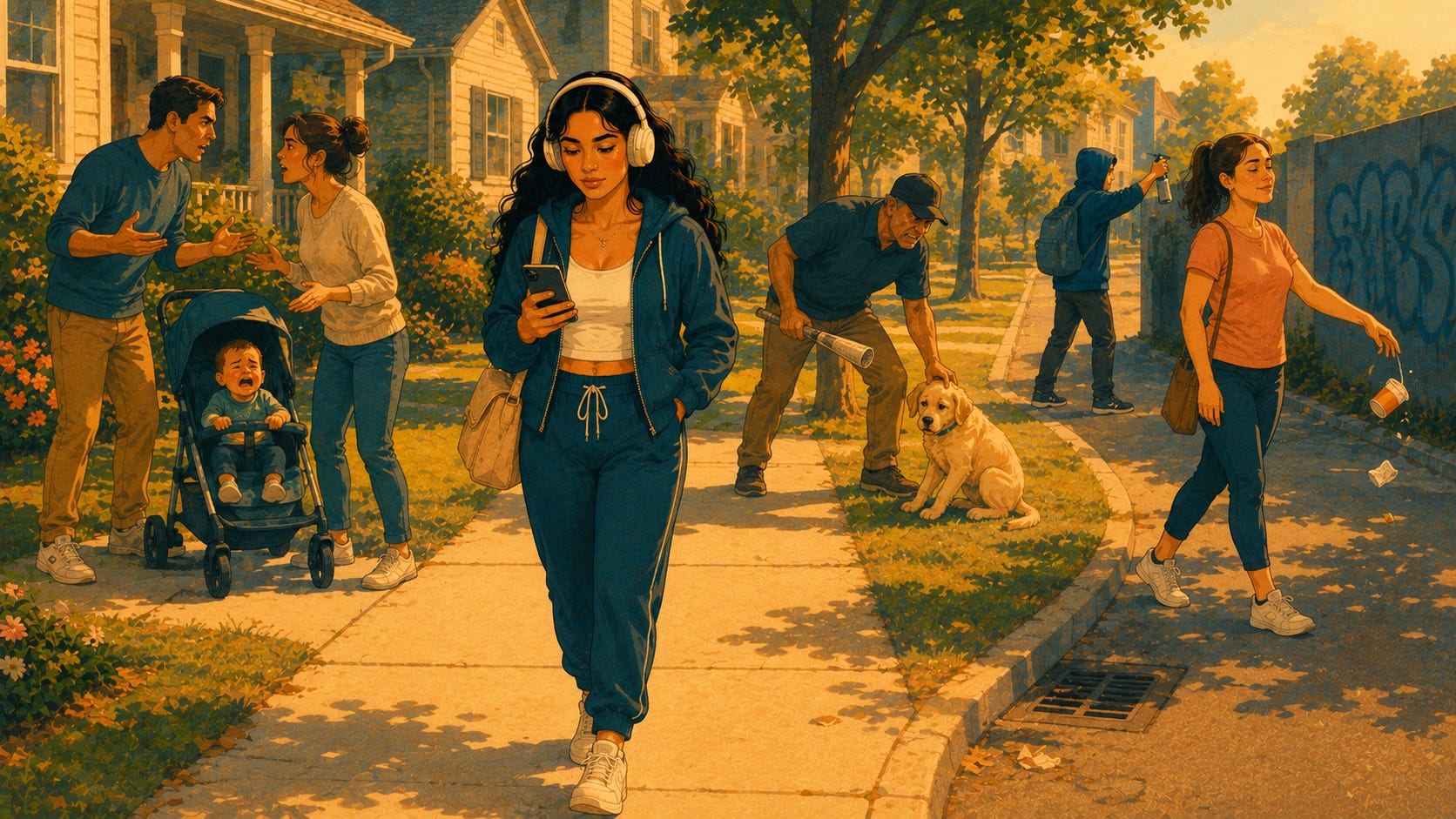
Specifically, we need to talk about the people who see something happen and choose to look away. The ones who hear the bigoted comment and pretend that they must have misheard it. The ones who watch cruelty unfold right in front of them and make the safe decision that it isn’t any of their business.
Look, I’m not trying to make you feel bad here. Please know I’ve absolutely been that person more times in my life than I’d like to admit. Most of us have.
Still though, the late, great Archbishop Desmond Tutu said it best: “If you are neutral in situations of injustice, you have chosen the side of the oppressor.”
As a recovering conflict-avoidant people-pleaser, that quote has been burned into my soul for the past decade. And every time I’m tempted to look away, those words grab me by the shoulders, shake me a few times to wake me up, and then challenge me to face the stuff that I’d rather be running from.
Contrary to popular belief, neutrality is not safety, maturity, level-headedness, or whatever self-soothing foolishness we so desperately want to believe.
Neutrality (if we’re going to be honest here and strip away all of the BS) is a vote for whatever is currently happening to continue happening.
And, as I love to say, what we allow is what will continue.
So, my friend, if you’re ready to stop being on the sidelines while the world continues to slowly burn, here are three ways to practice brave, everyday kindness.
Strategy #1: Practice One Small Act of Courage

Before we go any further, kindly allow me to smash a common myth.
This isn’t about becoming a hero. No one is asking you to get into screaming matches with random strangers. You don’t need to charge into a burning building or give a TED Talk that goes viral or quit your job to start a revolution.
Most of the kindness this world is starving for is much, much smaller than that. Not to mention, it’s also way more powerful.
I’m talking about one small act of courage, performed consistently, over time, by ordinary people in ordinary moments.
It looks like this:
You’re in a meeting and someone keeps interrupting your colleague. Instead of looking down at your notebook, you say, “Hey, I really want to hear what Nicole was saying. Can we let her finish her thought?”
You’re at a family dinner and your uncle makes a “joke” at the expense of a marginalized group. Instead of laughing or staying silent, you say, “Hmm, that landed weird for me. Can we talk about something else?”
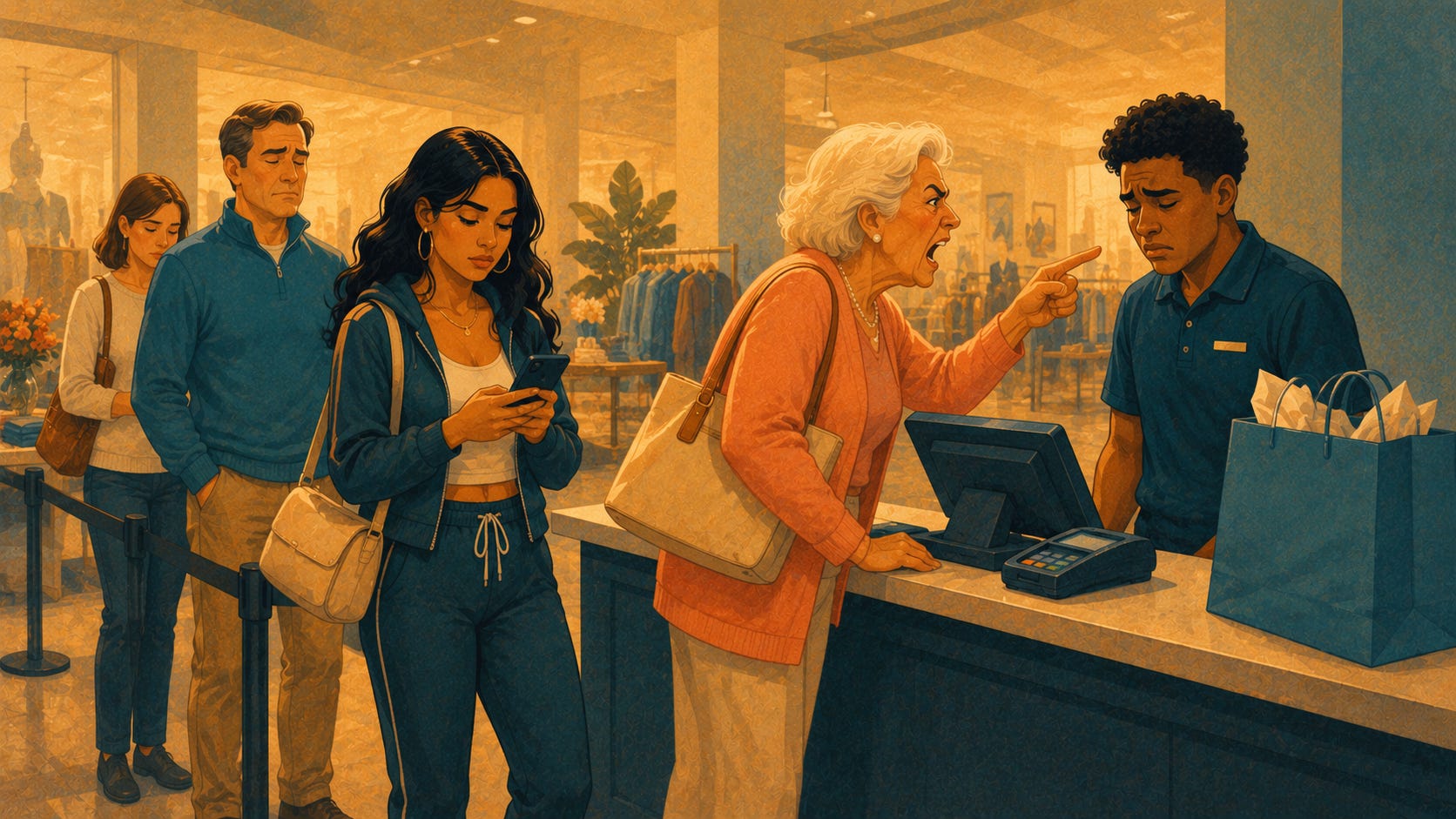
You’re at the grocery store and the cashier is clearly being verbally abused by the customer in front of you. Instead of pretending to be fascinated by your phone, you make eye contact, smile, and after the angry person leaves, you say, “I’m sorry that happened to you. You handled that really well.”
Sure, none of those things are going to land you on the cover of Time Magazine, but thankfully, something more life-changing will happen instead. Those small acts of courage will build the muscle for the big acts of courage that we’ll need later.
We don’t get brave by waiting for a big moment to show up. We get brave by being brave in the small moments, again and again, until being brave becomes who we are.
Here’s my challenge for you this week, Kindness fam. Identify one small act of courage you can practice every single day, then notice what starts to shift inside of you.
While this strategy is extremely useful, the next strategy I’m about to share has literally changed the course of my entire life (and I think it will do the same for you too).
Hi, it’s Shola! Allow me to interrupt your reading to mention that the fastest way to grow this kindness movement is to kindly share this article with others. If you’ve found this article helpful, please share that helpfulness with others to by tapping the “Share” button below. It’s free and it only takes a second.
Strategy #2: Focus on the Harm Being Prevented (Not on Your Discomfort)

Now let’s talk about the real reason most of us stay silent.
It’s not actually because we don’t care. It’s because the discomfort of speaking up feels so much bigger than the harm we’re witnessing.
If you’re anything like me (who again, is a recovering conflict-avoidant people-pleaser), you’ll notice that your brain does some wild mental gymnastics: “If I say something, this could get awkward, people might judge me, things might escalate, I might be wrong...”
Meanwhile though, while we’re wrestling with imagined realities, the actual reality is that real harm is happening in real time, right in front of us.
Look y’all I’ve stayed silent a TON of times, and you’ve probably done it too. It’s a deeply human reflex, and our brains do it to protect us…but there’s a huge problem with this: the logic is fundamentally backwards. Hopefully, what I’m about to say next will clear this up forever.
The discomfort of speaking up lasts a few minutes, maybe an hour, in the worst case, a day. The harm of not speaking up can last a lifetime for the person on the receiving end of the unkindness.
For real, please reflect on that.
When I started reframing my unwillingness to act from that perspective, my decisions started to change pretty quickly.
So here’s what I want you to try, if you’re up for it. The next time you’re in a situation where someone is being mistreated and you feel that familiar paralysis creeping in, ask yourself this transformative question:
“Whose comfort am I actually protecting right now?”
If the honest answer is “mine,” that’s cool. At least you’ve found your starting line.
The truth is, your discomfort in speaking up is a small price to pay for the protection and dignity of another human being. And in most cases, you’ll be surprised how often the room actually welcomes the person who breaks the silence. Most of us are waiting for someone, anyone, to say the thing we’re too scared to say ourselves. Be that person.
If nothing else, remember this: the discomfort is temporary, but the impact has the potential to last forever.
Strategy #3: Check In on the Targeted Person
This third strategy is the one most people forget about, and it might be the most important one of all.
Sometimes, you’ll be in a situation where you can’t intervene in the moment, or the unkindness happened in a flash and was over before you could process it, or you were just too stunned to react in real time, or speaking up would have unquestionably made things worse.
If so, please don’t beat yourself up for failing to act in the moment.
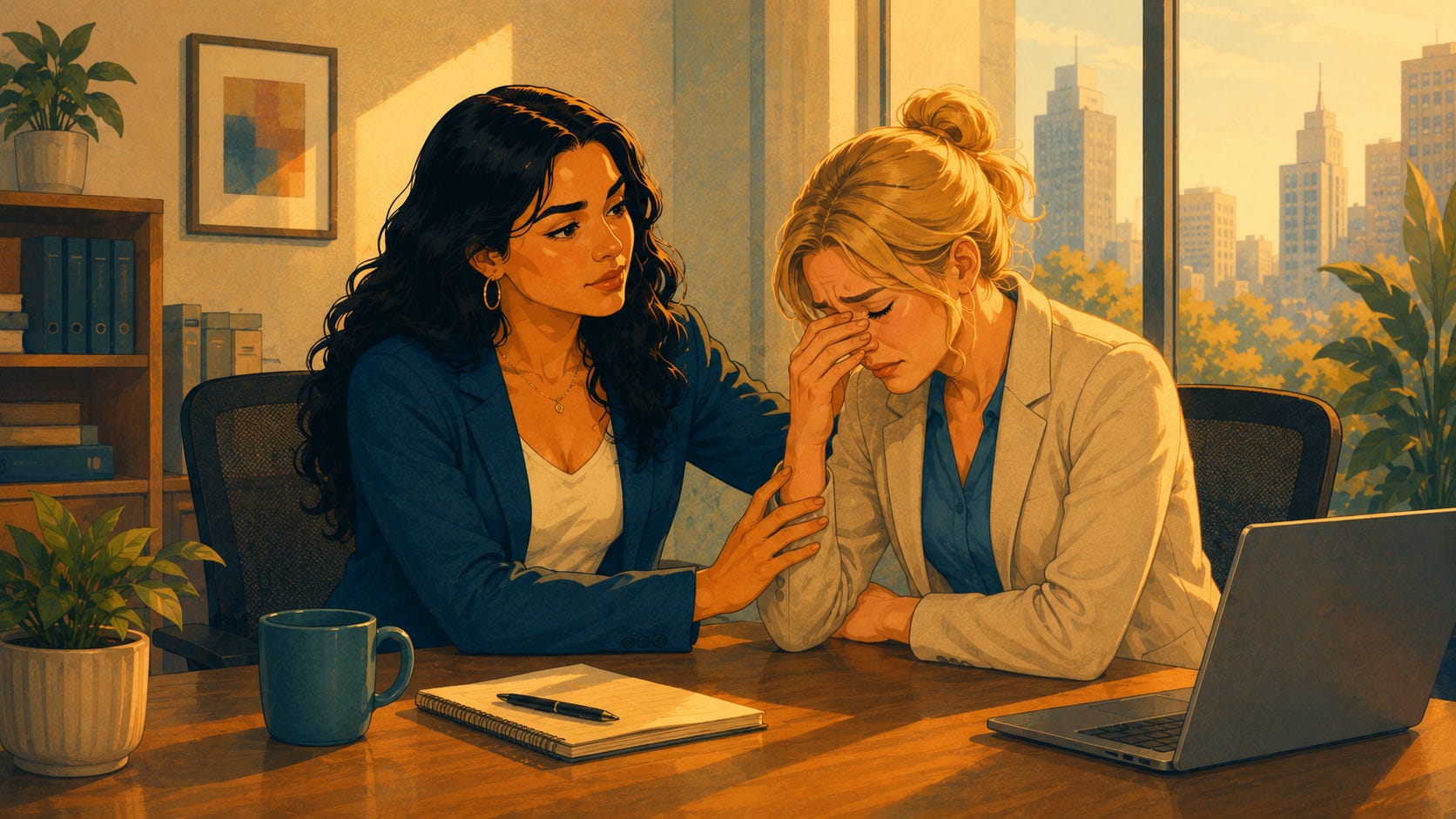
Actually, there’s some good news worth remembering: the moment didn’t end when the unkindness ended. The person who was targeted is still carrying it, and as mentioned, they might be carrying it for hours, or days, or weeks. And the simple act of checking in on them can change everything.
It can sound like:
“Hey, I saw what happened in there during the meeting with the board of directors. That wasn’t okay. Are you alright?”
“I’m sorry I didn’t say something in the moment. I want you to know that what they said was wrong, and I’m in your corner.”
“I noticed how that conversation went with that customer, and I just wanted to make sure you knew you’re not crazy. It was as messed up as it felt.”
Real talk, this kind of follow-up is one of the most important (and sadly, overlooked) acts of kindness in the entire universe. Here’s why:
It tells the person on the receiving end of the unkindness that somebody saw them. That they’re not alone, that they’re not imagining things, and that somewhere in the room, there was at least one person who knew what just happened was wrong.
You may never know how much a moment like that can mean to someone. I’ve been on the receiving end of it more than once in my own life, and I can tell you, those moments stay with you forever.
So even if you don’t say the right thing in the moment, follow up. Send the text, make the warm eye contact, walk over to their desk, most of all, let them know they’re not alone.
That, my friend, is what brave, everyday kindness looks like.
Here’s the Real Cost of Staying Neutral
I’ll wrap this one up by sharing the thing that finally broke me out of my own pattern of neutrality.
I once witnessed a woman ahead of me in line yelling cruel things at a cashier in a department store. Everyone in the store could hear it, and I was literally right behind this woman in line with other adult humans. And every single one of us, including me, looked down at our phones and pretended not to notice.
I went home that night and I could not sleep.
Not because of what she did. People like that woman are going to keep doing what they do because bullies are gonna bully. I couldn’t sleep because of what I did (or more accurately, what I didn’t do).
That cashier didn’t have a single person in that store in his corner that afternoon. Not because we were all monsters. But because we all chose to be nice instead.
I made a promise to myself that night that I was never going to be neutral again. And I’d love for you to join me in that promise.
Instead of neutrality, pick one small act of courage. Focus on the harm, not your discomfort. Check in on the targeted person.
That’s how we move past neutrality and actually change the world, one brave moment at a time. ❤️
Ubuntu,
Shola aka Brother Teresa
Please tap the ❤️ button!
It’s free, it’s fast, and most of all, it tells me you value this work and that I should keep writing every week in pursuit of a kinder world.

More From Shola:


When was the last time you wished you had said something but didn’t? What would you do differently if you could go back? Drop it in the comments and let’s learn from each other.
Yes, Elie Wiesel said it so powerfully: "We must always take sides. Neutrality helps the oppressor, never the victim. Silence encourages the tormentor, never the tormented."
I love… and hate this topic. Hate the abuse I witness so much. I usually acknowledge the person that got the mistreatment and I try to say something to the aggressor, however I usually stumble on my words or when the anger turns on me I don’t know what to say. I freeze. It’s because I don’t want to match anger with anger, even though that’s what I’m feeling. So I am trying to be calm and assertive, however I was taught that my thoughts and feeling were irrelevant and that conflict was to be feared. Do you have any tips on how to address the aggressor. Or is the secret to ignore the aggressor and to put the emphasis on the victim? Meanwhile the aggressor is still carrying on. I think I get triggered myself at the injustice and I want to go into proving that the abuse is so wrong, in so many ways. In most cases, I think these people can’t be reasoned with. It’s what they DO and how they operate in life. No self reflection or accountability. Your insight is always appreciated Shola! Thank you!