
The Three Toxic Needs Destroying Your Peace and Your Relationships
The most dangerous needs are the ones you don't notice.


No need to half-step, let me just dive right in this week.
Three of our most “normal” needs are destroying our peace, our relationships, and our ability to be authentically kind.
I’m not talking about legitimate human needs like safety, connection, or purpose because those are essential for our wellbeing. This week, I’m talking about the psychological dependencies that masquerade as needs but actually end up controlling us, compromising our values, and preventing us from showing up as our best selves.
Here’s why this matters, fam: we cannot create a kinder world from a place of desperate need.
Real kindness flows from strength, security, and choice. When we’re driven by toxic needs, we’re operating from scarcity and fear…and as I’m sure you can imagine, that never leads to authentic connection or meaningful impact.
Since May is Mental Health Awareness Month, this feels like exactly the right time to talk about these three toxic needs. Because unfortunately, these needs are silently (and, very effectively) sabotaging the mental health of millions of people right now.
And most folks have no idea it’s even happening.
Let’s expose them, one by one.
Toxic Need #1: The Need to Be Liked

In the spirit of full transparency, I want you to like me. I have zero shame in admitting that.
I want you to like me as a person, I want you to like this article (yes, literally, by tapping the ❤️ button at the bottom of it), I want you to like my books, I want you to like my podcast…you get the point.
But here’s the critical distinction that changed my life: I don’t need you to like me.
The key word in that sentence is “need.”
When you need to be liked, you become a people-pleasing performance artist who can’t tell uncomfortable truths, can’t honor your boundaries, and worst of all, always says “yes” when every cell in your body is screaming “no.”
In my case, I took this “needing to be liked” foolishness to a dangerous extreme.
I allowed people to treat me in any way they saw fit, and oftentimes, I would say, do, and be whatever I thought would earn others approval…even when it cost me my dignity and self-respect.
Allow me to share two painfully shameful examples from my own past:
In college, I forced laughter out of my lungs when my dorm mates told sickening racist jokes, because I needed them to like me (looking back on it 30 years later, I have no clue why I thought that I needed their friendship).
Years later, I agreed to a free Saturday speaking engagement on a topic I didn’t even care about…and ended up missing my daughter’s first-ever swim class. Why? Yep, you guessed it: because I couldn’t bear the thought of the organizer being upset with me.
Not only is needing to be liked is toxic, it’s also an impossible goal. The odds of us making it through this earthly experience without someone disliking us, is basically zero.
Case in point: Do you know what Martin Luther King Jr., Mahatma Gandhi, Mother Teresa, and even Jesus all had in common?
They had people who didn’t like them. A lot of people, in some cases.
If those four couldn’t pull off being “universally liked,” what hope is there for you and me to do it?
Here’s the wildest part about this: the more desperately we need to be liked, the less likable we actually become.
For real, think about that for a moment.
People can sense desperation, and it gives them what the kids these days call “the ick.” Authentic connection happens when people feel like they’re interacting with a real person, not a carefully crafted persona designed to win approval.
Here’s the kindness strategy to overcome the Need to be Liked: Identify one situation where you’re currently compromising your values or boundaries because you need someone to like you. Then, with warmth in your heart, but steel in your spine, hold the boundary anyway. You can still be kind, considerate, and respectful while also being authentic. Notice the difference in how you feel when you operate from want instead of need.
(Important caveat to ensure no one gets this twisted: this isn’t permission to be the “I don’t give a damn if people like me…sorry, not sorry!” person, and use that as cover to be an insufferable ass. It’s about choosing self-respect over chasing approval, and wanting to be liked over needing it).
Toxic Need #2: The Need to Be Right
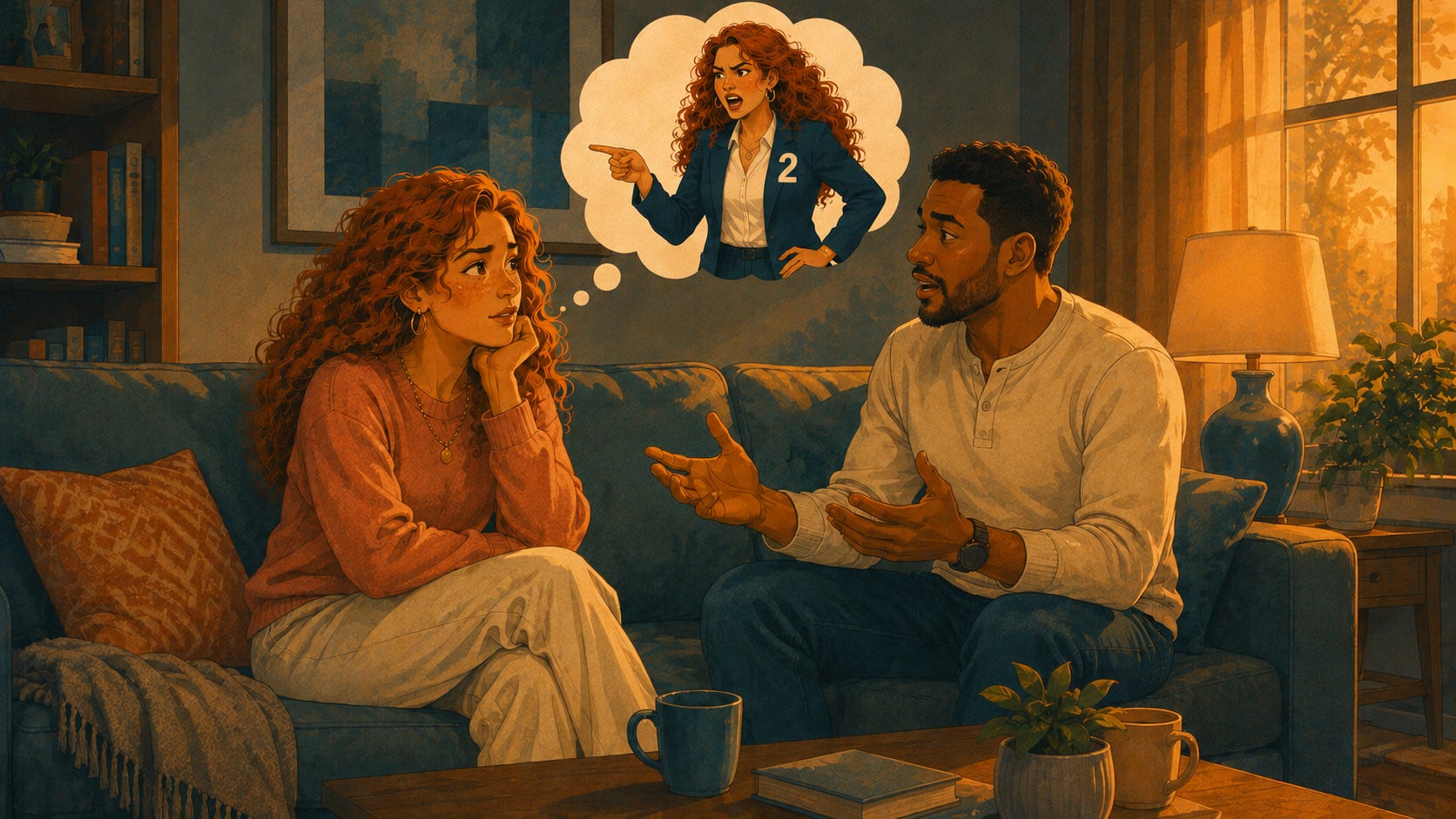
This second toxic need is particularly insidious because our culture rewards it.
There are plenty of folks who celebrate people who own the “other side” with clever clapbacks. I know people who deeply admire leaders (I’m using that term loosely here) who don’t apologize, and who project “strength” by never admitting that they were wrong. Hell, we’ve built entire social media ecosystems around turning every disagreement into a battle for intellectual supremacy.
Out of all three of the toxic needs in this article, the need to be right is the one that destroys relationships the fastest. And if you’re a person who can’t (or won’t) admit that you’re capable of being wrong, it’s only a matter of time before you find yourself being alone.
When people need to be right, every conversation becomes a competition. Every disagreement becomes a threat to their identity. Every time someone challenges their perspective, their nervous system activates like they’re under attack, because in their mind, they are.
I see this stuff playing out everywhere these days:
Couples who can’t resolve conflicts because both partners need to be right about who forgot to pay the electric bill.
Families who can’t talk about anything that matters because Uncle Bob needs to be right about his conspiracy theories, and Aunt Susan needs to be right about her opposing views.
Workplaces where good ideas go to die because someone needs to be right about (and refuses to budge on) their inferior solution.
Here’s what’s really happening beneath the surface: the need to be right is actually about the need to feel safe and worthy. We’ve convinced ourselves that being wrong means we’re stupid, foolish, or somehow less valuable as human beings. So we defend our positions like our lives depend on it (because for some folks, it literally feels that way).
Contrary to popular belief these days, being wrong doesn’t diminish our worth, it actually makes us more relatable and wise. The smartest and most self-confident people I know are wrong about things all of the time, and they’ve learned to wear their mistakes as badges of growth rather than shame.
Here’s the kindness strategy to overcome the Need to be Right: Practice being wrong gracefully. The next time someone corrects you, resist the urge to defend or minimize. Try saying, “Thank you for the correction. I was mistaken about that.” Better yet, practice saying, “I don’t know” when you actually don’t know instead of pretending you do or making stuff up. And in your next disagreement, instead of building your counterargument while the other person is talking, ask one genuine question to understand their perspective better.
You might be shocked at how much lighter life feels when you stop carrying the impossible burden of always being right.
Two toxic needs down, and I saved the sneakiest toxic need for last.
Hi, it’s Shola! Allow me to interrupt your reading to mention that the fastest way to grow this kindness movement is to kindly share this article with others. If you’ve found this article helpful, please share that helpfulness with others. It’s free and it only takes a second.
Toxic Need #3: The Need for It to Be Easy

The third toxic need might be the most dangerous of all, because it’s disguised as something positive.
We live in a culture obsessed with hacks, shortcuts, and instant solutions. We want six-minute abs, get-rich-quick schemes, and the magic bullet that solves all our problems without requiring us to do any actual work.
But as we both know, that’s just not how life works. At the risk of being Captain Obvious here, allow me to drop this hot take: Anything worth having requires effort.
Meaningful relationships require work. Financial security requires discipline. Getting in shape requires discomfort. And yes, creating a kinder world (i.e., the one we’re all trying to build here) requires persistence in the face of obstacles that would make most people bail.
Even worse, when we need everything to be easy, we become allergic to the very challenges that would help us to grow. Specifically, that means we’ll avoid difficulty, quit when things get hard, and in the most tragic outcome of all, we’ll actually become fragile (and fragility is NOT the energy that this current moment in time requires).
The Stoic philosopher Seneca said it best, 2,000 years ago:
“I judge you unfortunate because you have never lived through misfortune. You have passed through life without an opponent — no one can ever know what you are capable of, not even you.”
If that wasn’t enough, here’s another sneaky reason this toxic need is so destructive: it makes us vulnerable to manipulation.
Scammers, con artists, and snake-oil selling weirdos absolutely love people who are searching for effortless solutions:
👉🏾 Learn how to make $10,000/month on Substack posting one Note a day!
👉🏾 Discover how to use AI to become a NYT Best-Selling author in only 30 minutes!
👉🏾 Lose 10 lbs of belly fat with this weird exercise hack in only 5 minutes a day!
👉🏾 Attract your dream mate with one spritz of this irresistible cologne/perfume!
Sadly, there’s an inexhaustible market of folks out here on these streets who are willing to do anything to skip the work. The stakes are WAY too high for us to ever consider being one of them.
To be clear, I’m not advocating for unnecessary suffering or making things harder than they need to be…your boy is not about that life at all. I’m talking about accepting that worthwhile things require sustained effort, and that our ability to persist through difficulty is one of our greatest superpowers as a human being.
Here’s the kindness strategy to overcome the Need for it to be Easy: Identify one important area of your life where you’ve been seeking the easy path instead of doing the necessary work. Maybe it’s your health. Maybe it’s a hard conversation you’ve been avoiding with your teenager. Maybe it’s a personal goal you keep “starting on Monday.” Whatever it is, commit to one difficult-but-necessary action in that area every day this week.
Each time you choose the harder-but-better path, you’re building the muscles that could potentially save your life when life gets really challenging.
The Common Antidote For All Three Toxic Needs

The antidote to the need to be liked, the need to be right, and the need for it to be easy isn’t more discipline, more willpower, or more grinding.
It’s (wait for it…)
Kindness.
Shocking I know, but stick with me on this.
Specifically, I’m talking about the kindness of giving yourself permission to disappoint people who needed you to perform. I’m also talking about the kindness of admitting when you’re wrong. And I’m definitely talking about the kindness of doing the hard thing today so “Future You” doesn’t have to suffer tomorrow.
These toxic needs are not character flaws to be ashamed of, because Lord knows I’ve been guilty of all three of them. Still though, the difference between people who thrive and people who suffer is recognizing these toxic needs, and then choosing to act from a place of strength rather than desperation.
In other words:
When we free ourselves from the need to be liked, we become authentically likable.
When we release the need to be right, we become genuinely wise.
When we stop needing things to be easy, we become truly strong.
Best of all, from that place of strength, we can finally show up as the kind of people who can heal our hurting world.
And that is something our world desperately needs ❤️.
Ubuntu,
Shola aka Brother Teresa
Please tap the ❤️ button!
Hey Kindness Fam! As you know, my weekly articles will always stay free and outside of any paywall. The whole point is to keep this kindness content open to everyone who’s interested. But, if you’ve ever finished one of these and thought, “I really hope he never stops doing this,” you can kindly support my work with a virtual tip over at Buy Me a Coffee. Zero pressure, always appreciated. 🙏🏾

Which of these three toxic needs hits closest to home for you, and what’s one small step you can take this week to start loosening its grip? Jump into the conversation in the comments below!
Incredible. Kindness, yes yes yes.
I wholeheartedly agree with you on all of these. Boy, was it hard for the people pleaser in me to stick to my truth even when it meant others might be upset with me. But the more I stay grounded in my truths and my values, the easier it gets to hold my boundaries, and to your point, be kind while I do it. Love your work, Shola!